A country cottage style quilt

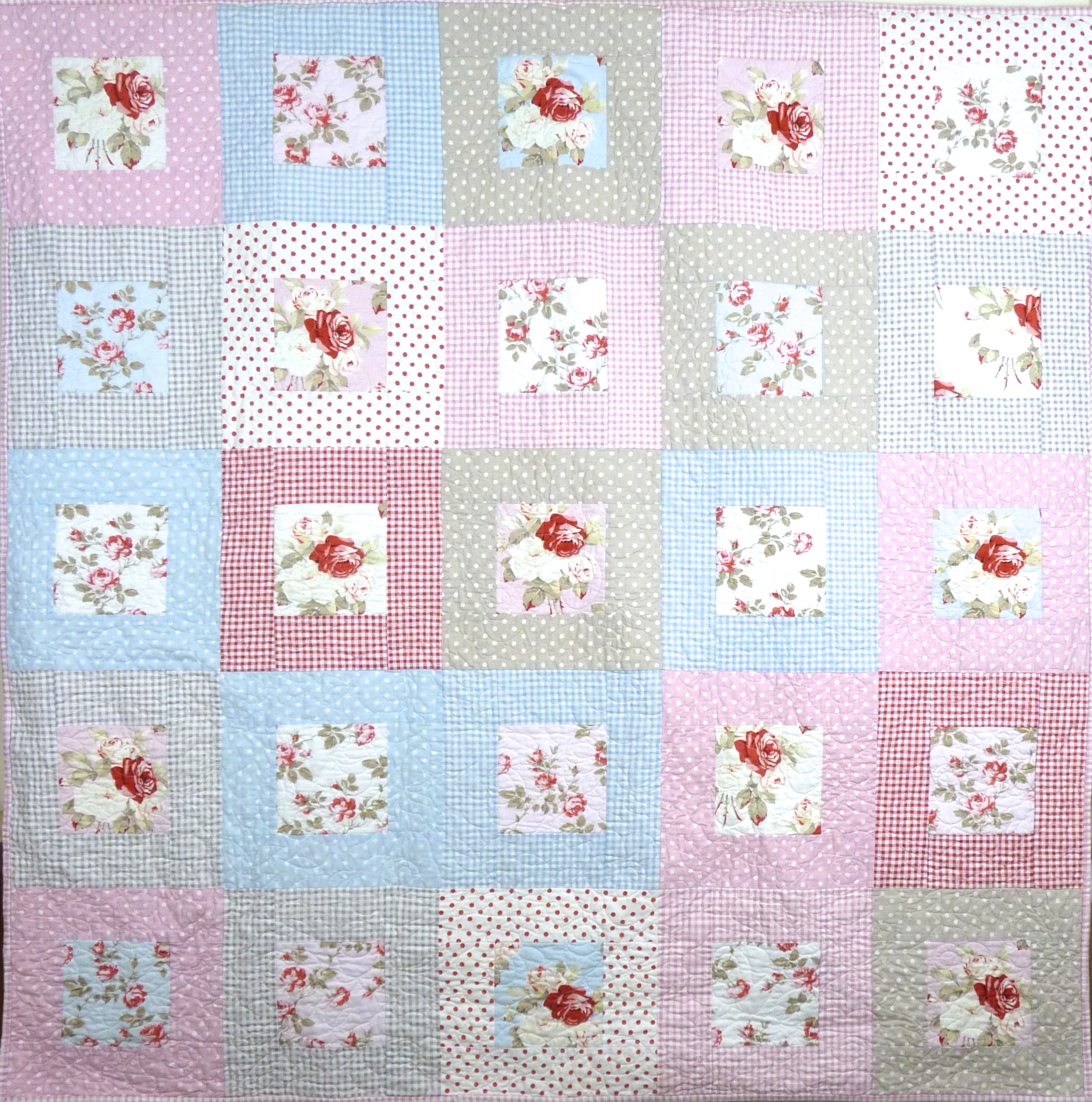
Fabric designs featuring large roses and pretty, soft colours make the perfect choice for a country cottage style quilt.  This is a quilt I made some time ago using Tanya Whelan’s Petal collection (sadly no longer available).

Shabby chic/country cottage style quilt

Quilt made in Tanya Whelan Petal fabric

The colours appear sun bleached and summery whilst the overblown roses are reminiscent of warm afternoons relaxing in a country garden.

For the piecing, I chose an upscale version of a pattern appropriately named “square in a box”.  There are lots of variations of this pattern however I kept it simple with a large centre square framed in either a spotted or checked fabric.  The layout I chose alternates between blocks framed in spotted or gingham fabrics.  Initially I alternated the two rose designs too however I quickly changed that to a random placement of the centre roses.  Symmetrical layouts really are not for me.

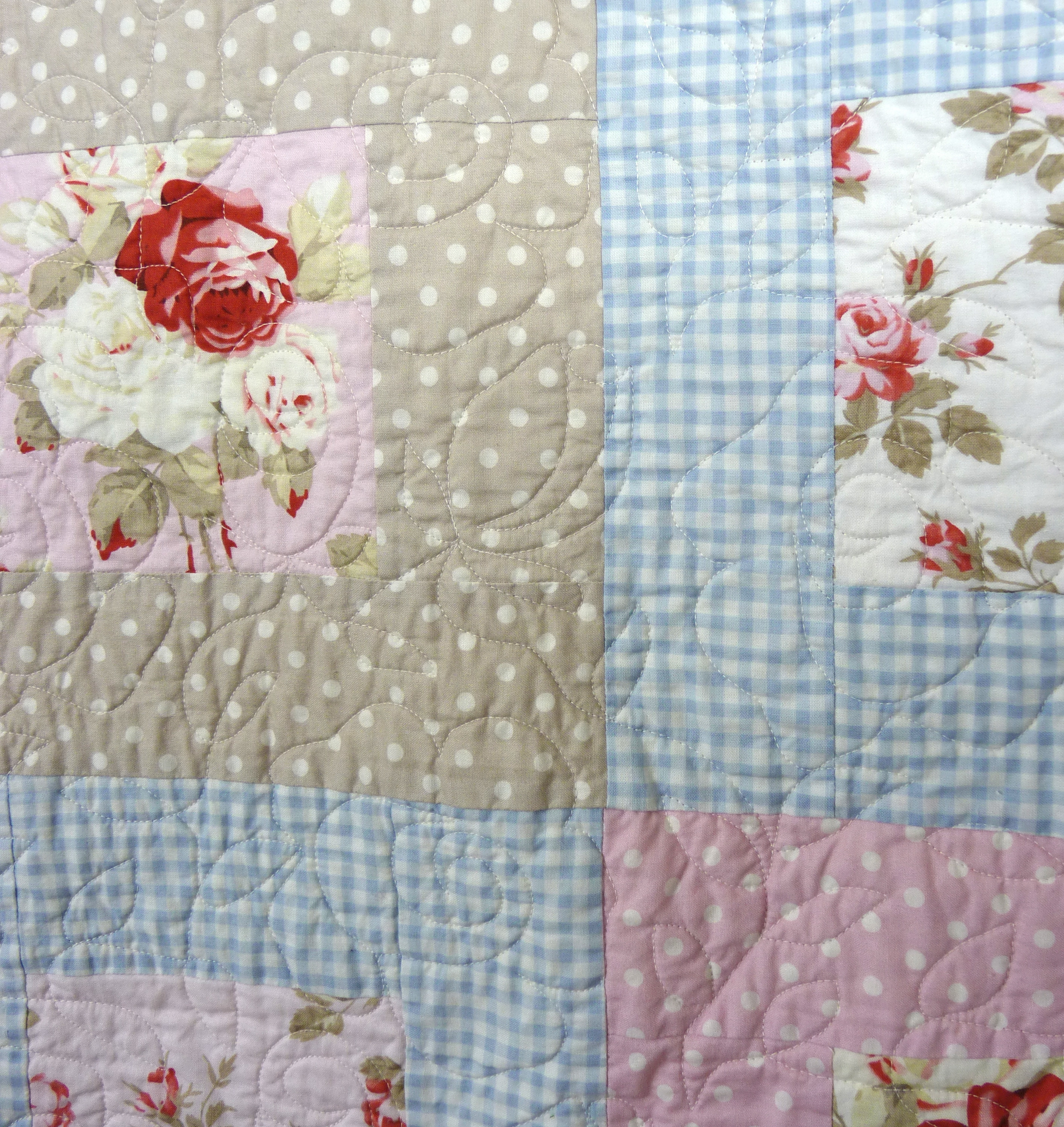
Roses quilting on shabby chic/country cottage style quilt

Roses quilting detail on Tanya Whelan petal quilt

The quilt was long arm quilted using a dense pattern of open roses.  It is a little difficult to see in this photo however I think you can make out one of the roses in the gingham square.

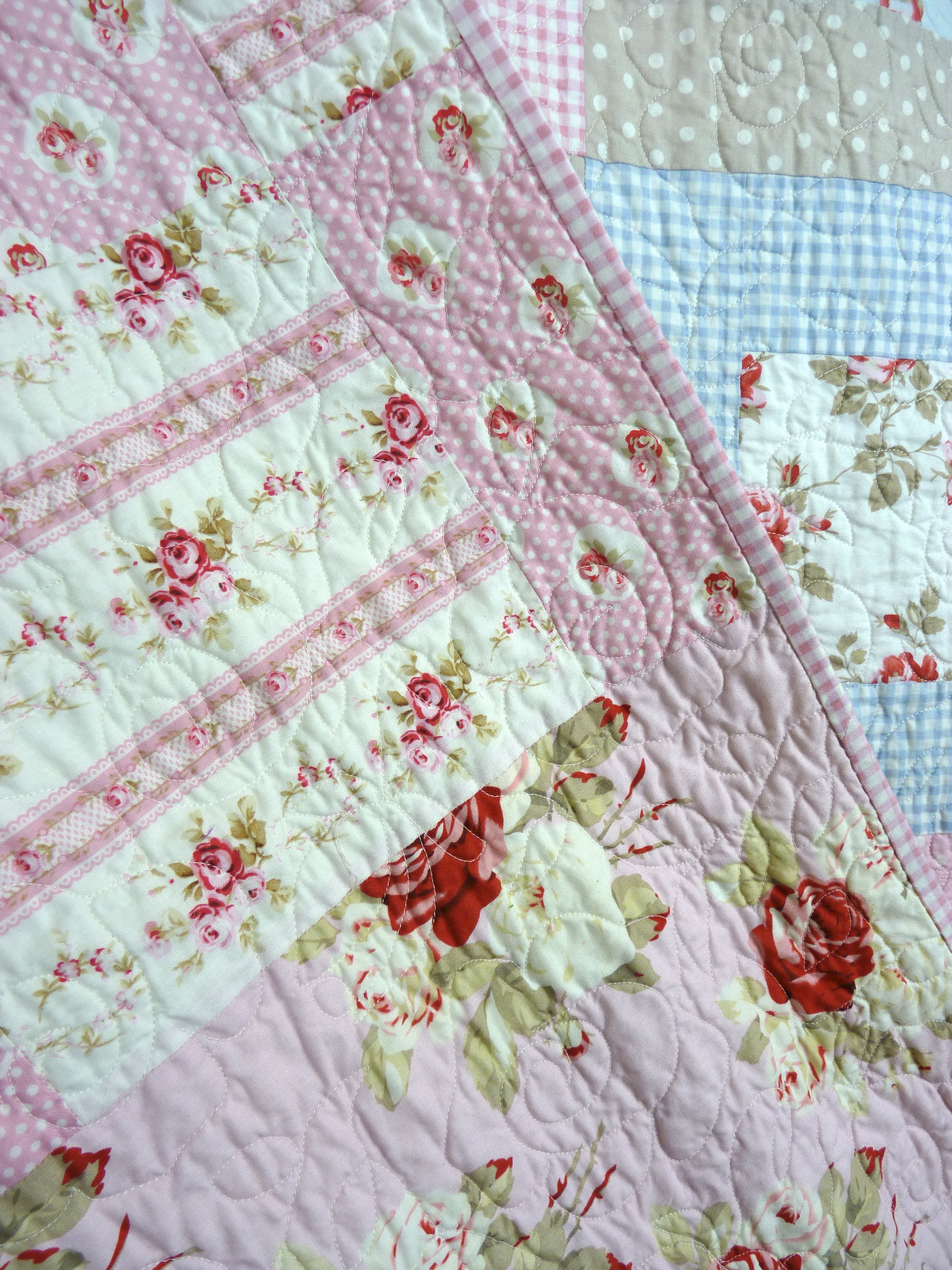
Pieced backing on shabby chic/country cottage style quilt

Pieced backing on Tanya Whelan petal quilt

In keeping with the country style of the fabrics, I made a pieced backing for this quilt featuring the large roses and two smaller rose designs not used on the front.  The pink gingham fabric makes a charming binding to finish.

This quilt has been washed to achieve that lovely vintage crinkly appearance and is made from 100% cotton fabrics, thread and wadding.  It will be on display at my Bucks Open Studio event in June.  I’d love to see you if you are able to visit.

Over the next few weeks I’ll be sharing details of more of my quilts that will be on display in June.  Remember you can also follow me on Facebook, Instagram and Pinterest.  I look forward to seeing you there.

Lined drawstring bags

Over the past week, I have been busy making cute little drawstring bags in preparation for my Bucks Open Studios event.  For those who don’t know, Bucks Open Studios is the largest visual arts event in Buckinghamshire.  It takes place in June each year and allows members of the public to visit local artists to learn more about their work and the artistic processes involved.  I will be exhibiting my work at St Nicholas Church in Kingsey along with seven other artists.  We’d love to see you if you fancy an interesting day out.

To whet your appetite, here are a couple of the bags that you’ll see on my display.  Each bag is approximately 10 inches high by 7 inches wide  and is made from Jeni Baker’s fabulous pattern available at Incolororder.com  Jeni calls it the Everything bag and it really is suitable for everything.  Her little bag makes a great re-usable present wrapping, or a fabulous gift in its own right.

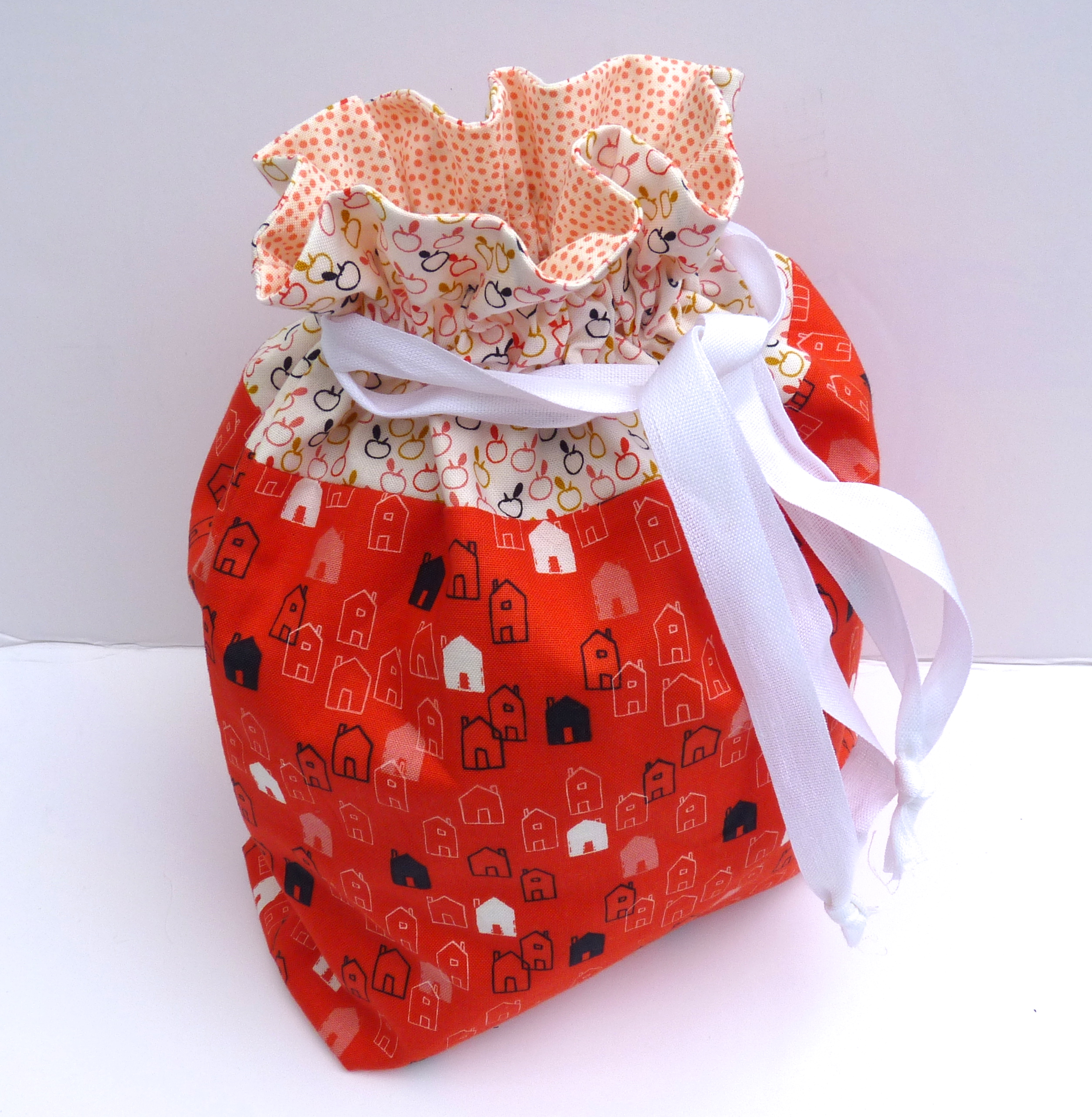
Lined drawstring bag in Dashwood fabric

Lined drawstring bag in Mori Girls fabric

I love the little houses and apples on this one.  Fill it with a pretty tea towel, specialty coffee and homemade biscuits to make a great housewarming gift for someone moving into a new home.

Lined drawstring bag in Dashwood fabric

Lined drawstring bag in Fablewood fabric

This is one of my favourites.  Just love those little leaping foxes.  Add a baby-gro, a copy of Peter Rabbit and some dribble bibs (Hot Chop Threads makes some fabulous ones) and you have a great gender-neutral baby gift.  The little bag will get so much use later as it is perfect for carrying toys or a change of clothes.

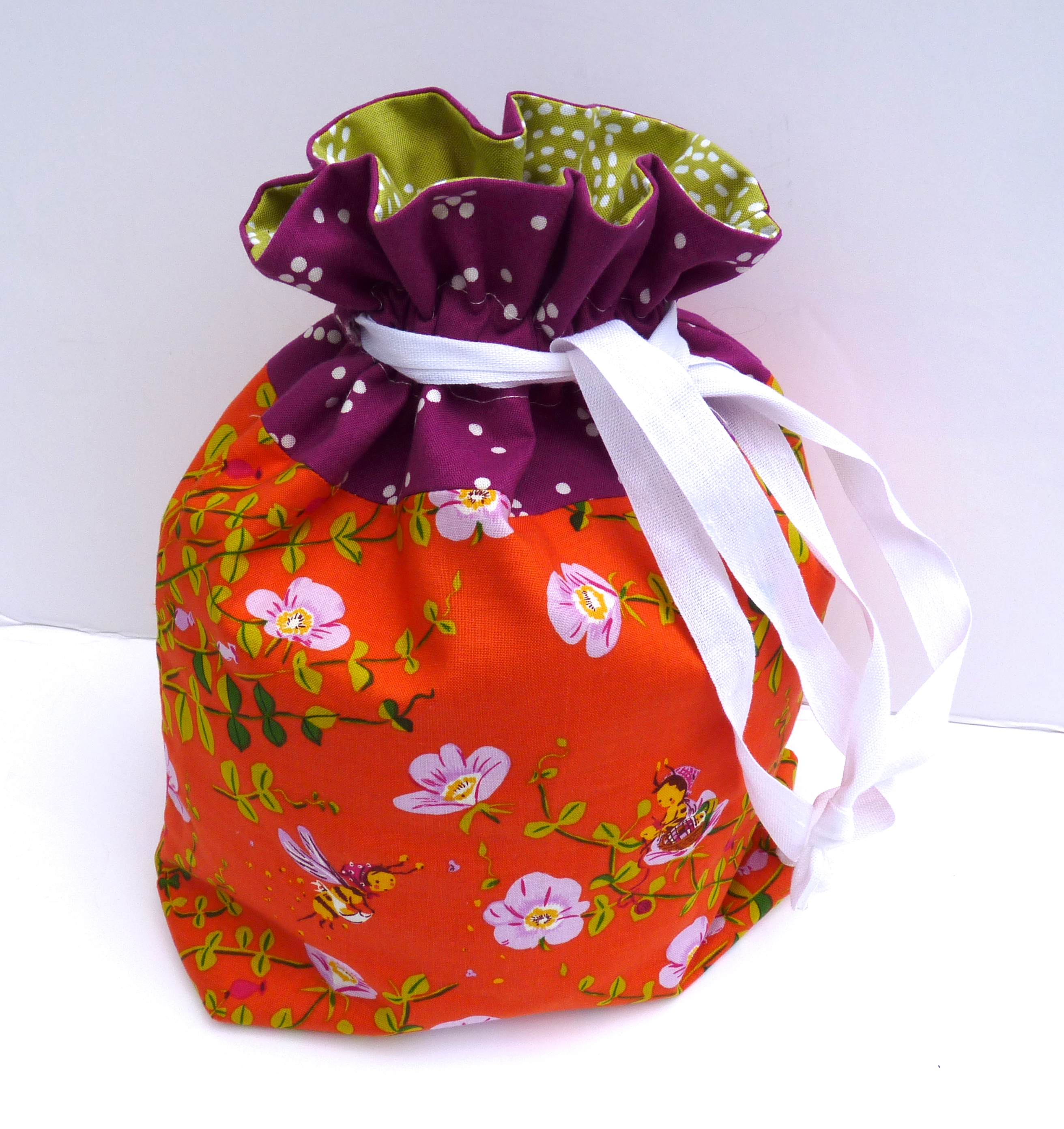
Lined drawstring bag in Briar Rose by Heather Ross

Lined drawstring bag in Heather Ross fabric

Don’t you just love those sweet little knitting bees?  Pop a couple of balls of yarn and some knitting needles in this bag to make a lovely gift for a crafty friend.

Like what you see?  Remember you can follow me on Facebook, Instagram and Pinterest to see more lovely makes.

Swiss meringue buttercream flowers

Back in February I was at Faircake for their Buttercream Flowers Cake class learning how to make piped flower decorations using swiss meringue buttercream.    The class, which is jam-packed with content, includes how to make a variety of large flowers, succulents, leaves and smaller filler flowers.

Swiss meringue buttercream is light, not too sweet, has a lovely velvety smooth texture and is so irresistibly delicious.  Although not difficult to make, this buttercream is tricky to work with as it melts easily and is certainly not recommended for hot summer days.

Here are some of the pretty flower designs that can be achieved.  All these were made using a Wilton 104 nozzle, centres were piped using a Wilton No. 2 nozzle and leaves with a Wilton 352 nozzle.  Enjoy!

First up, everyone’s favourite – a large rose

Swiss meringue buttercream rose

Swiss meringue buttercream rose

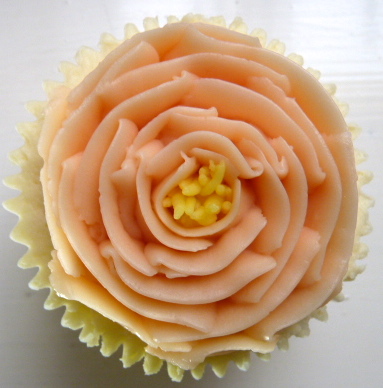
Next a pretty open rose

Swiss meringue buttercream open rose

Swiss meringue buttercream open rose

And finally spring-time cherry blossom.

Swiss meringue buttercream cherry blossom

Swiss meringue buttercream cherry blossom

A feast for the eyes and delicious too.

Double gauze swaddle blanket – a tutorial

Spring seems to be the season for new babies  – baby lambs, baby birds and lots of human babies too.  A lovely present for a new baby is a swaddle blanket.  One that has been handmade makes that gift extra special.

Swaddle blankets are easy to make and take very little time.  You could easily whip one up in an afternoon.  They make a beautiful and practical gift for a baby shower or new mum.  Not just for swaddling babies (although they are great for that), swaddling blankets also make fabulous nursing wraps and pram covers.

Double gauze with its light, airy feel is the perfect fabric to use for a swaddle blanket.  Sarah Jane has just released a new double gauze as part of her Sommer range for Michael Miller.  Made from 100% cotton, it is deliciously soft, light as a feather and comes in a range of beautiful fresh colours.   At 52 inches wide it is more than enough for a decent sized swaddle blanket.  And because it is cotton, it is breathable and ideal for warmer weather.

So how do you make one?  I searched the internet so you don’t have to and found this great tutorial by Molly from Purl Soho.   This is my slightly modified version.

For a 44 inch square swaddle blanket you will need:

  • 1.25 metres of Sommer double gauze (I used Mini Painted Gingham in Mist)
  • 100% cotton thread (I used Aurifil 50wt in off-white)
  • 70/10 needles (not essential however I found it helpful to use a finer needle)
Double gauze swaddling blanket materials

Double gauze swaddle blanket materials

The gauze I used is helpfully marked with a grid of one inch squares (you can see them in the photo above as a line of slightly looser weave which is where the gauze layers are joined together).  These grid lines are much easier to see when the wrong side of the fabric is uppermost.  Using these lines as a guide, cut the piece of double gauze to 46 inches long.  I found it easier to use scissors and a single layer of fabric.  Don’t be tempted to cut a double layer of fabric.  That double gauze can be slippery.  And don’t follow the printed lines of the gingham when cutting as these won’t be on the fabric grain.  Leave the selvedges as they are for now.

On each of the cut edges, fold over a 1/2 inch hem and then fold over another 1/2 inch to give a double hem.  Use your iron to press at each step when folding your hem (takes a little longer however the finish will be much better).  Pin the hem from the right side of the fabric and sew the hem with the right side of the fabric uppermost.  I used a 3/8 inch seam and a walking foot to make it easier to control the layers.  I also increased my stitch length to 3.  Sewing the hem from the front makes it much easier to maintain the correct seam allowance and it gives a nice neat edge on the hem.

Double gauze swaddling blanket hem

Double gauze swaddle blanket hem

Lay your blanket (hemmed top and bottom) on a table and, following one of the grid lines, cut off the selvedge on one  side.  Measure 46 inches from this cut edge across your blanket and cut your blanket to 46 inches wide, thus removing the other selvedge at the same time.  Fold and sew a 1/2 inch double hem along each side.  There is no need to mitre the corners.  Just fold them over as shown in the photo above.

Ta-dah!  Your swaddle blanket is now finished.  See, even Ted loves it.

Double gauze swaddling blanket

Double gauze swaddle blanket

I found the Sommer double gauze lovely to work with.  It didn’t fray and the sizing added to the fabric gave it enough body to make it easy to handle.  I hand washed my swaddle blanket in cool water to remove the sizing and gave it a quick spin in the washing machine to get rid of most of the water.  Shinkage was minimal – about 1% – and the fabric did become amazingly soft.

The mist colour way, a pretty light turquoise, is the perfect choice for a gender neutral gift or if the sex of the baby is unknown.  Other colours available include pink, blue and grey.  Fabric HQ, which is where I bought mine, has a good range of both the single and double gauze.

Happy sewing!

Polaroid blocks

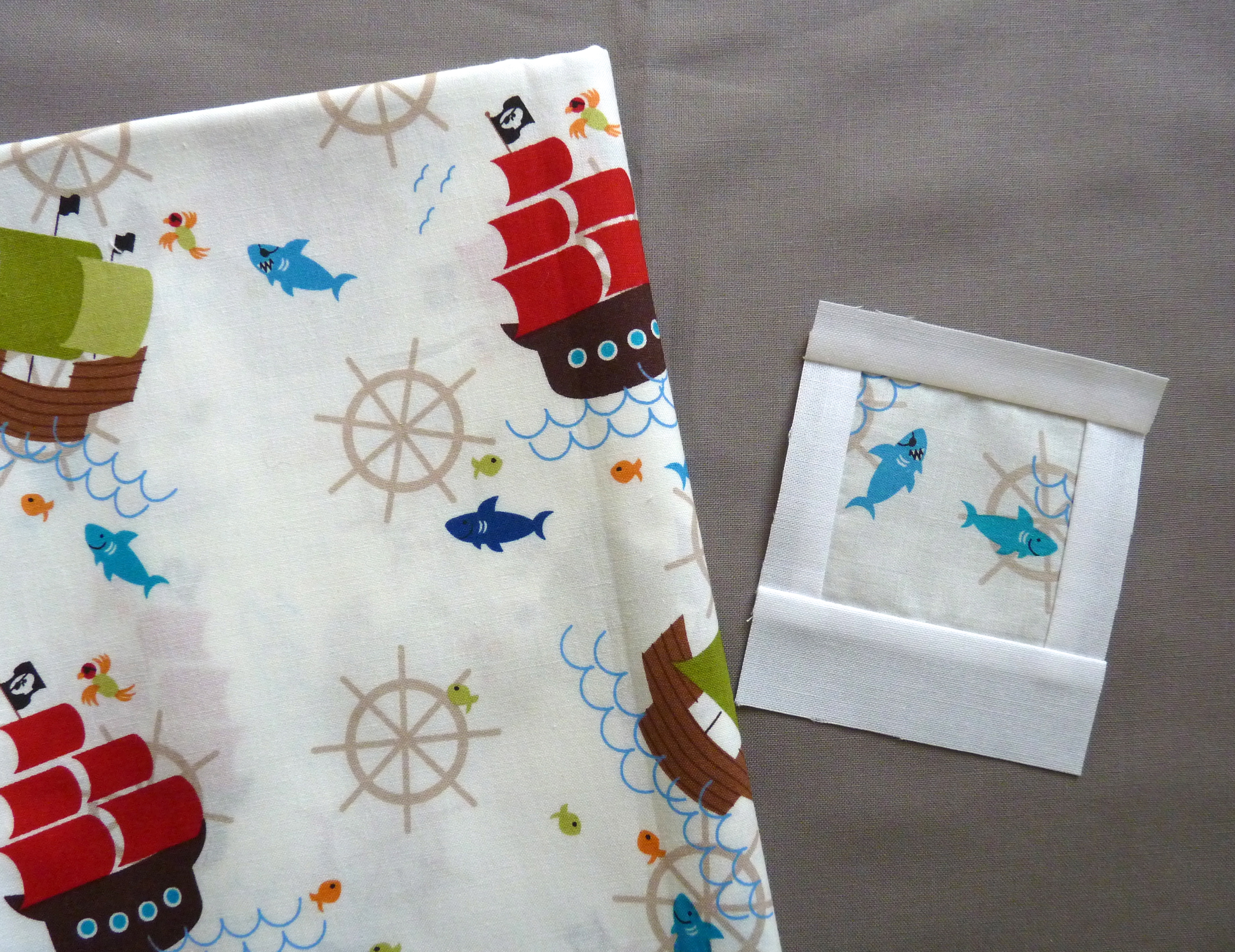
Polaroid blocks are my latest obsession.  I love how you can use them to highlight the tiny details that might otherwise be overlooked in a busy print.  Take this pirate fabric as a case in point.  Did you notice the pirate shark, complete with eye patch and wicked teeth, in the main fabric?

Pirate shark patchwork block

Pirate shark Polaroid block

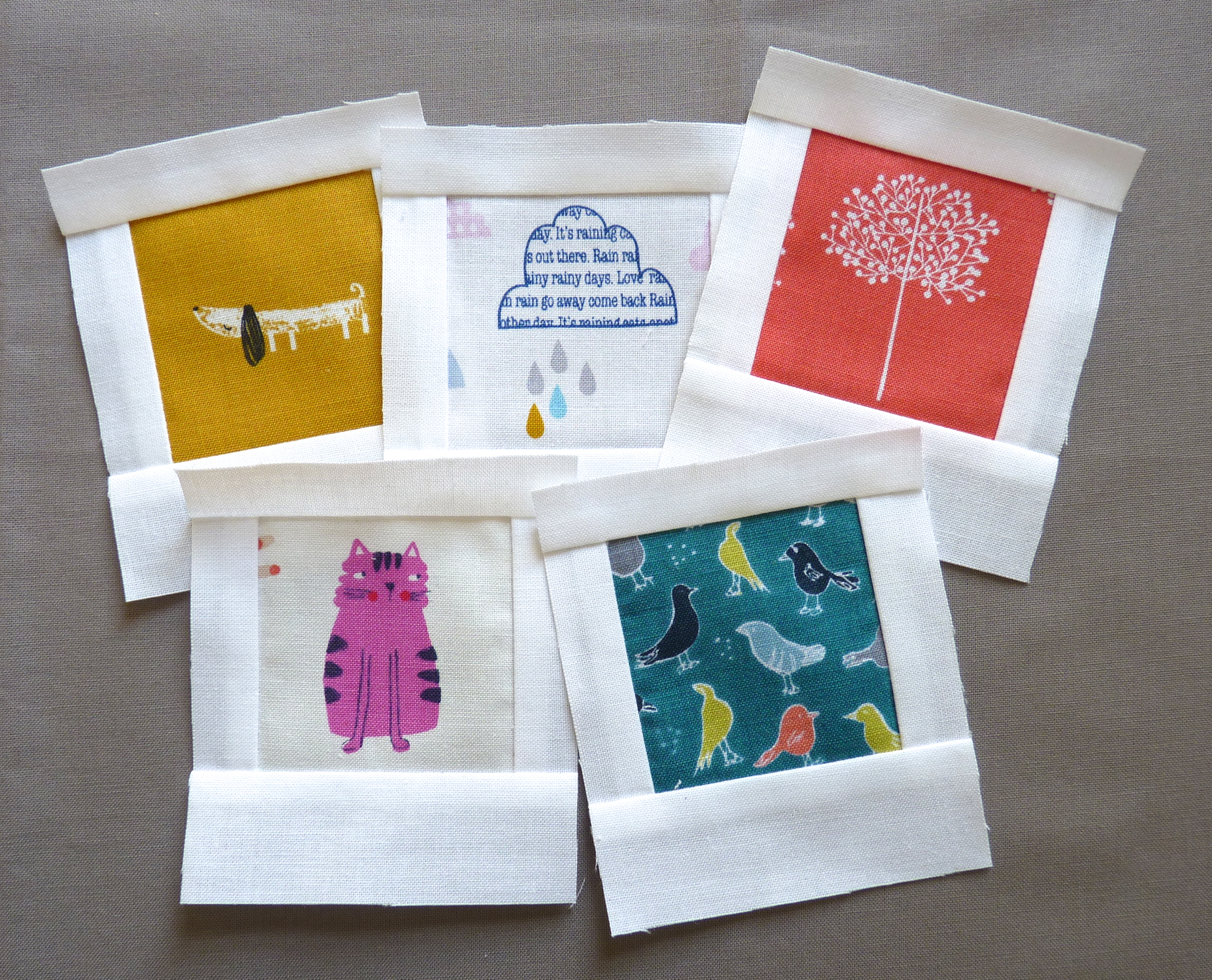
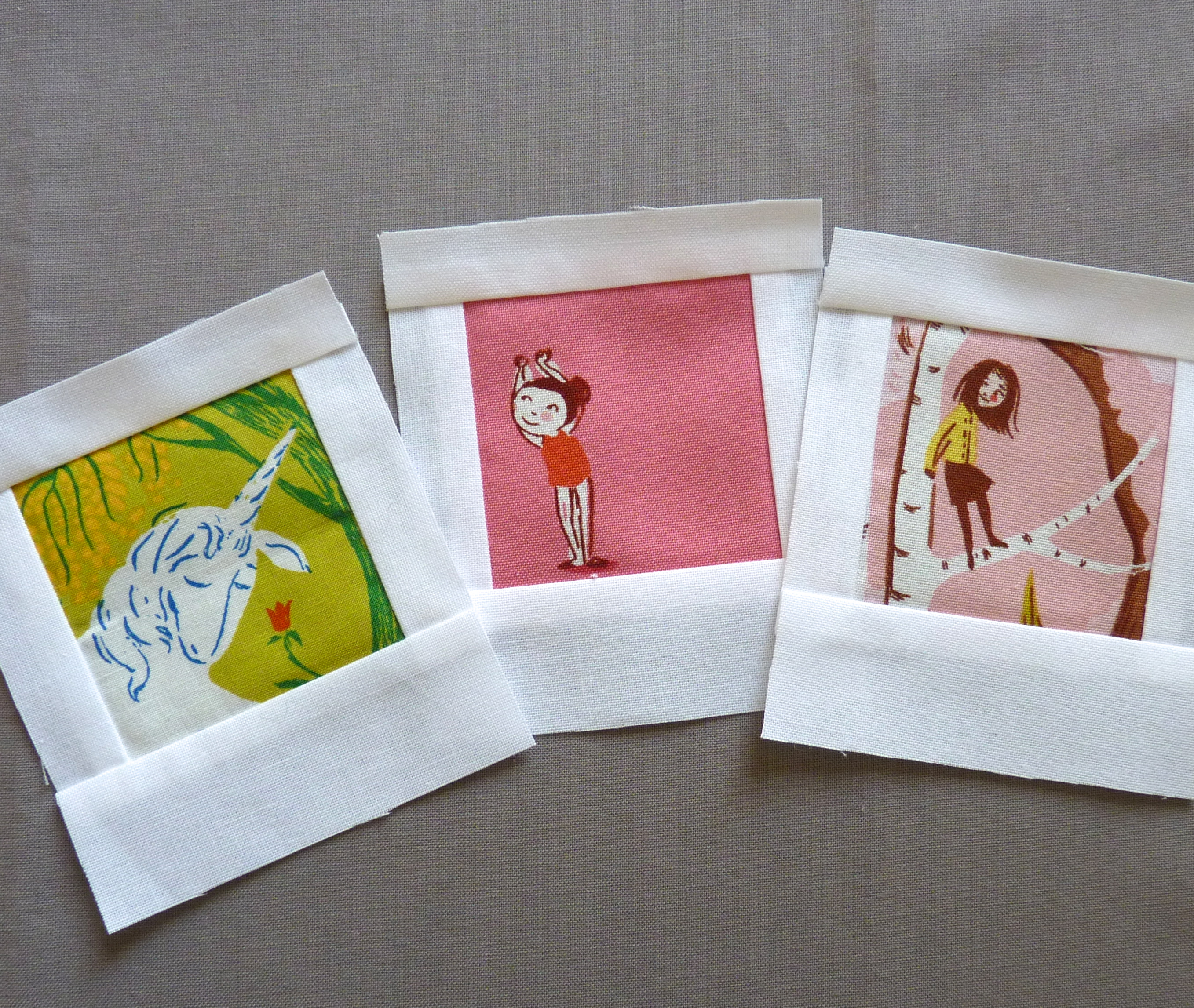
Polaroid blocks were all the rage a few years back and I think it is time they made a comeback.  I know that all the fussy cutting makes them greedy of fabric but I don’t care.  There are just so many adorable fabric designs that are crying out to be made as Polaroids.  Who could resist the cute little images from these Dashwood Studio prints?  (Oops!  Error alert – the pigeon fabric is part of the VeloCity collection from P&B Textiles.  This is what happens when you chop off selvages).

Polaroid quilt blocks in fabrics by Dashwood Studio and P&B Textiles designs

Polaroid blocks in fabrics by Dashwood Studio and P&B Textiles

And I adore these quirky illustrations from favourites by Heather Ross.

Polaroid blocks in Far Far Away and Tiger Lily fabrics

Polaroid blocks in Heather Ross fabrics

Aneela Hoey is another great designer whose images are perfect for Polaroid blocks.

Polaroid blocks in Little Apples fabric

Polaroid blocks in Aneela Hoey fabrics

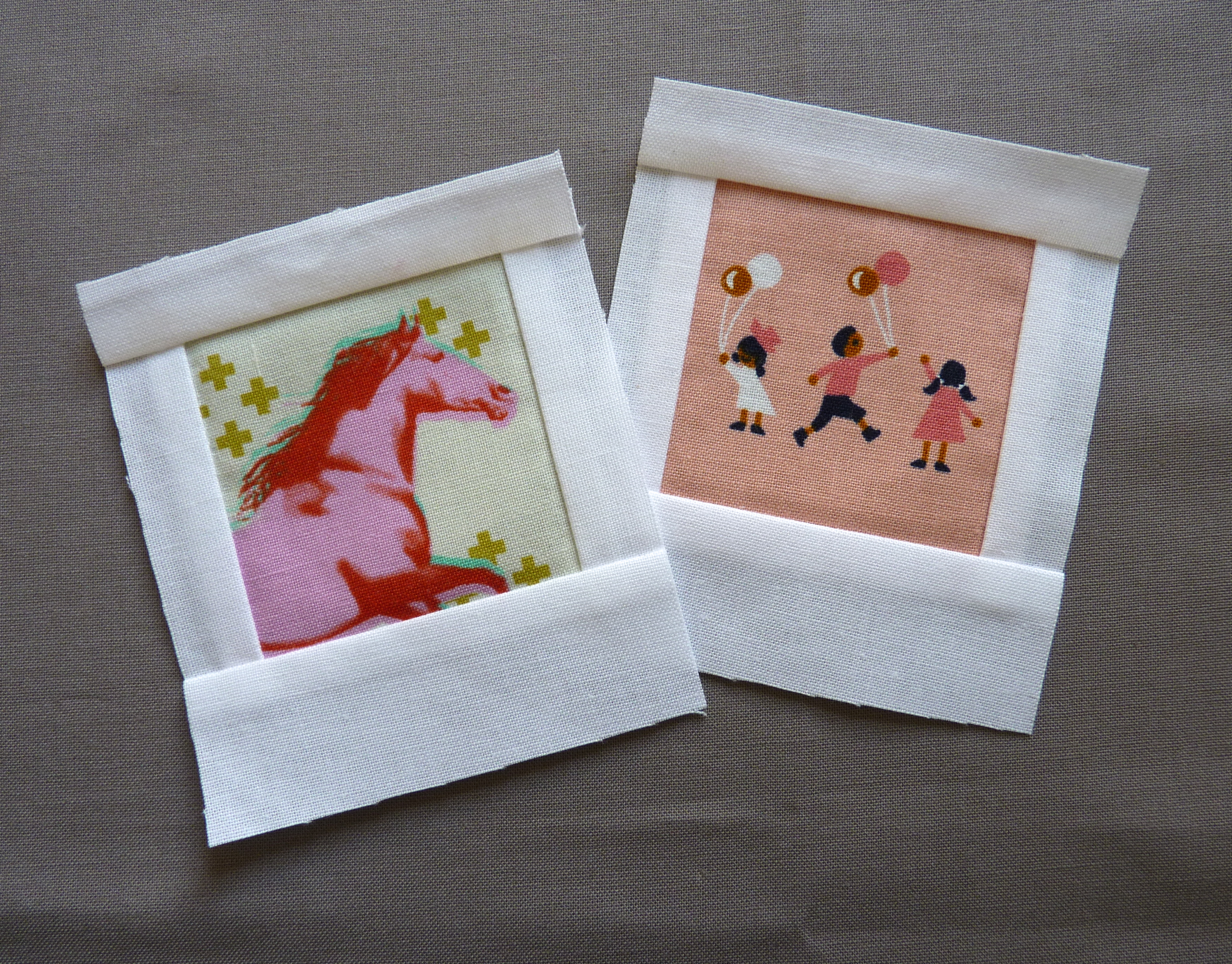
Then there are these fab ones by new(er) kids on the block, Cotton and Steel.

Polaroid quilt blocks in Cotton and Steel designs

Polaroid blocks in Cotton and Steel fabrics

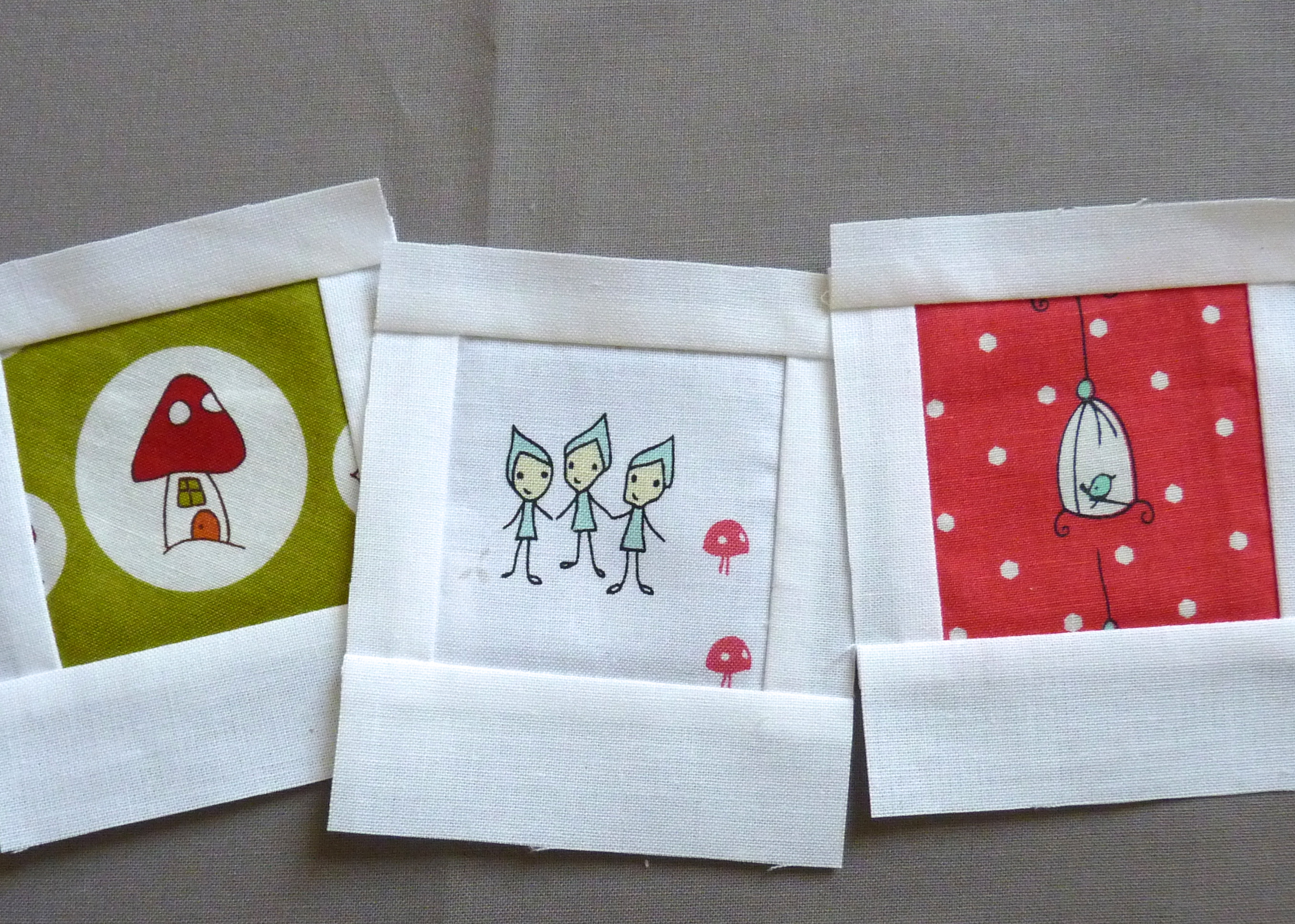
And if you really want to overdose on cuteness, you”ll love these sweet little images by Australian designer Natalie Lymer.

Polaroid blocks in fabric by Natalie Lymer

Polaroid blocks in Cinderberry Stitches

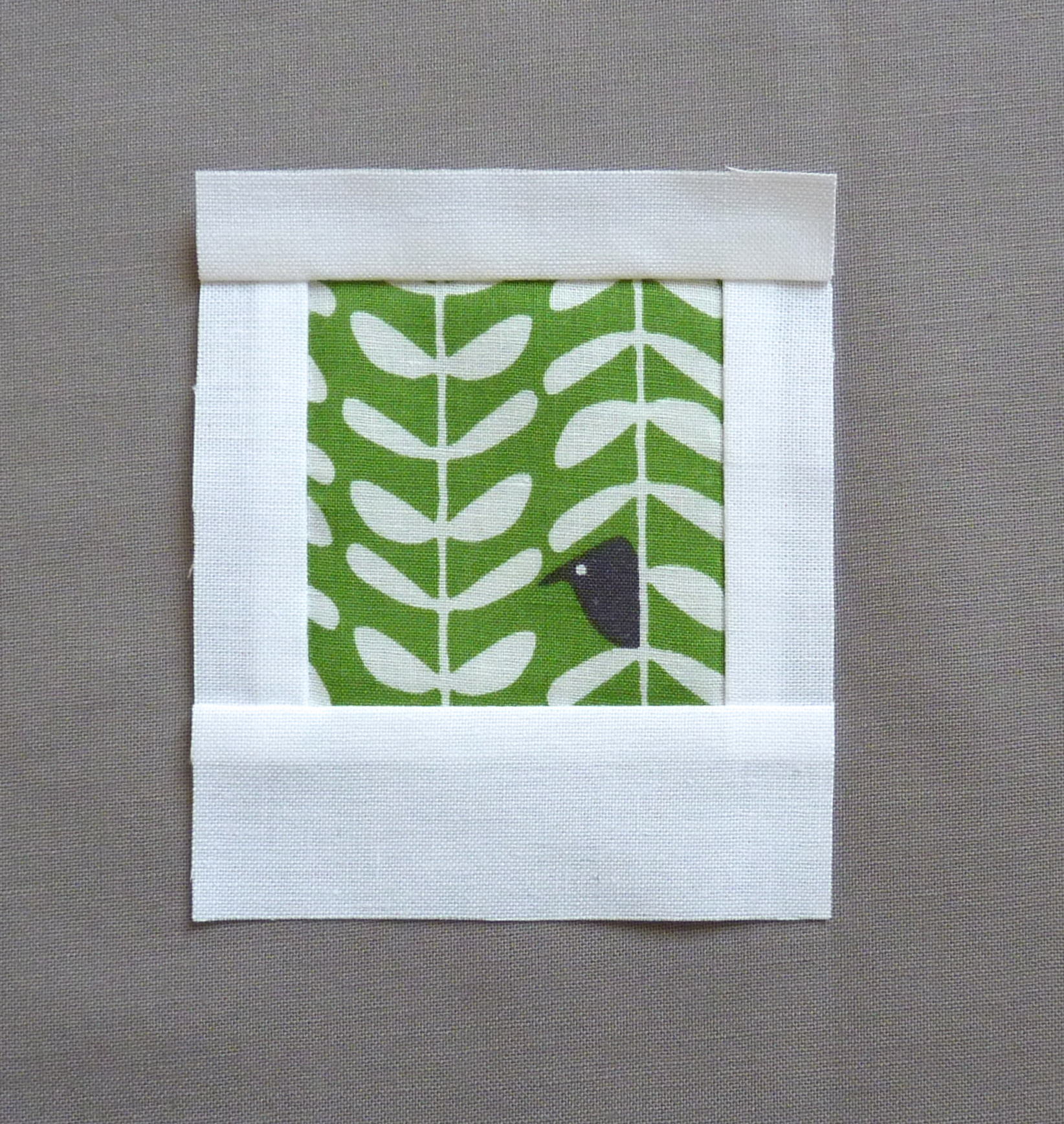
I love all these blocks however my absolute favourite from my latest batch of Polaroids is this little one.  A crow peeking in the branches from the Yoyogi Park collection by Heather Moore.

Yoyogi peeking Polaroid block

Yoyogi Park Polaroid block

Ok, I think that’s enough cuteness for one day.  I’m back to the cutting board as I have another 80 blocks to trim up.

If you’re inspired to make your own Polaroid blocks, then this tutorial by Capitola Quilter is a great one to use to get you started.

Milk churn patchwork quilt

What do you give someone when you want  something that says “you’re special”, something that says “thank you”, something that says “I love you”?  For me, the answer is usually always a handmade quilt (sometimes it is cake but that is another story).

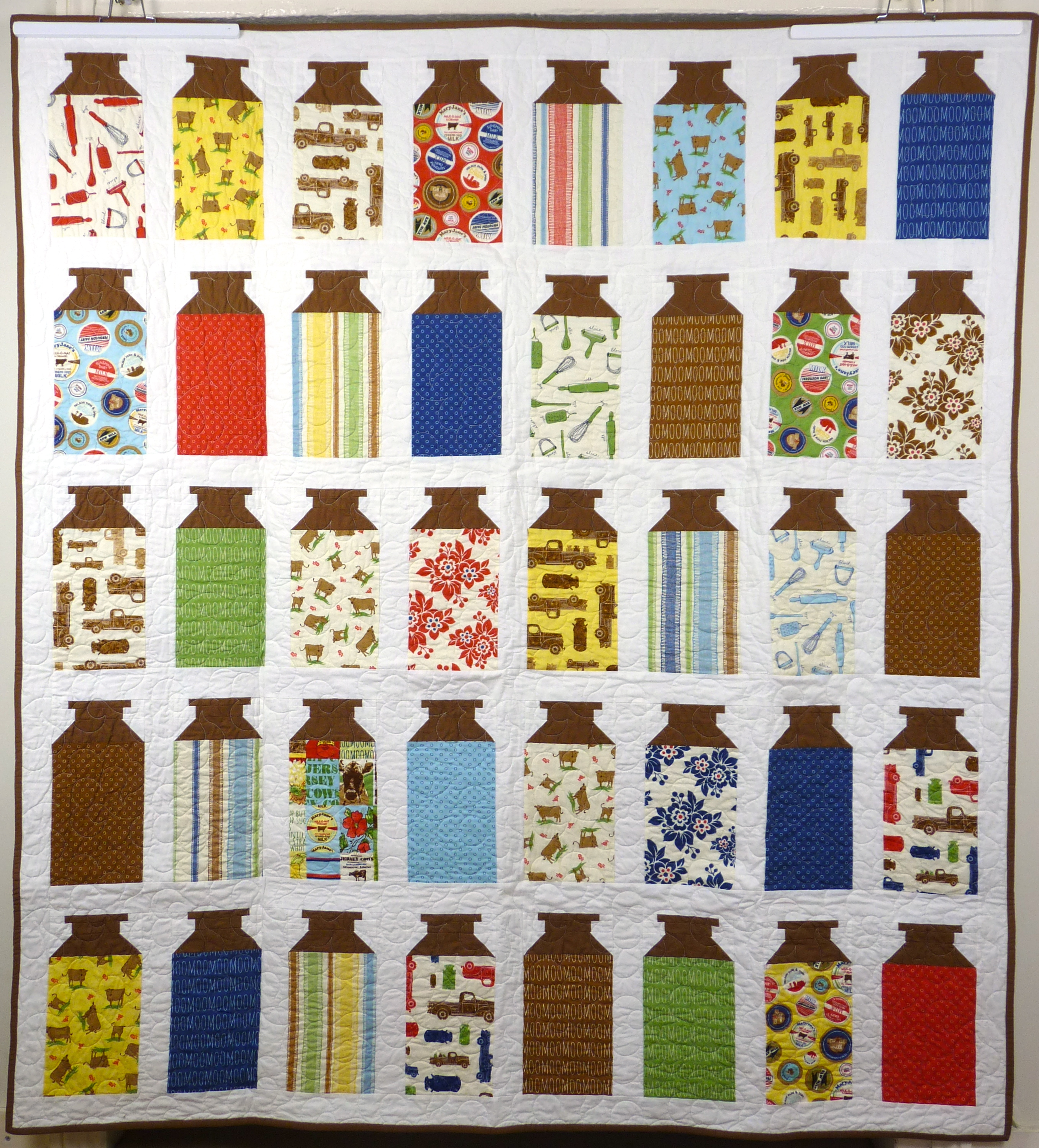
Earlier this year, it was my privilege to make a custom order quilt for a couple who have a jersey cow stud.  When I showed my client a  fun quilt pattern featuring rows of milk churns (remember those?) we knew we’d found the perfect design.  I mean, dairy farmers and milk churns, what could be more appropriate?

Milk cow kitchen patchwork quilt

Milk churn patchwork quilt

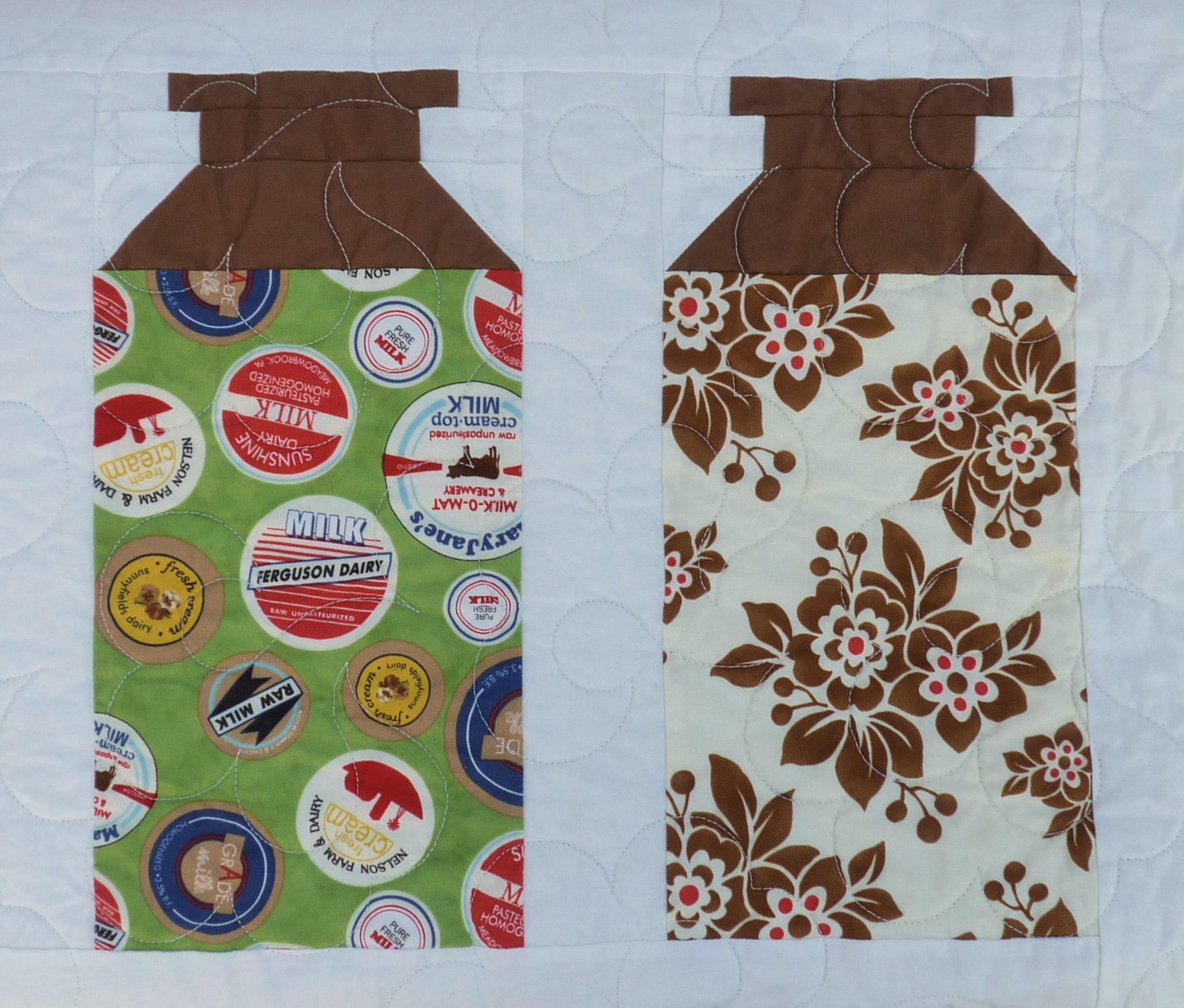
The fabric collection is Milk Cow Kitchen by Mary Jane Butters for Moda.  Nostalgic, a bit kitsch, the collection features tiny jersey cows, vintage cars, kitchen utensils, milk bottle tops and my personal favourite, lots of moos!!.  There is even a recipe for strawberry jam.

Milk Cow Kitchen patchwork quilt detail

Milk churn patchwork quilt detail

To make the quilt I used this free pattern from the Fat Quarter Shop.  I did change the pattern slightly by  adding an extra column of milk churns to make it wider and I changed how I added the sashing.  The milk churn lids were made as larger strips that are then cut down making it much quicker and easier to put together than it first looks.

Milk Cow Kitchen patchwork quilt detail

Milk churn patchwork quilt detail

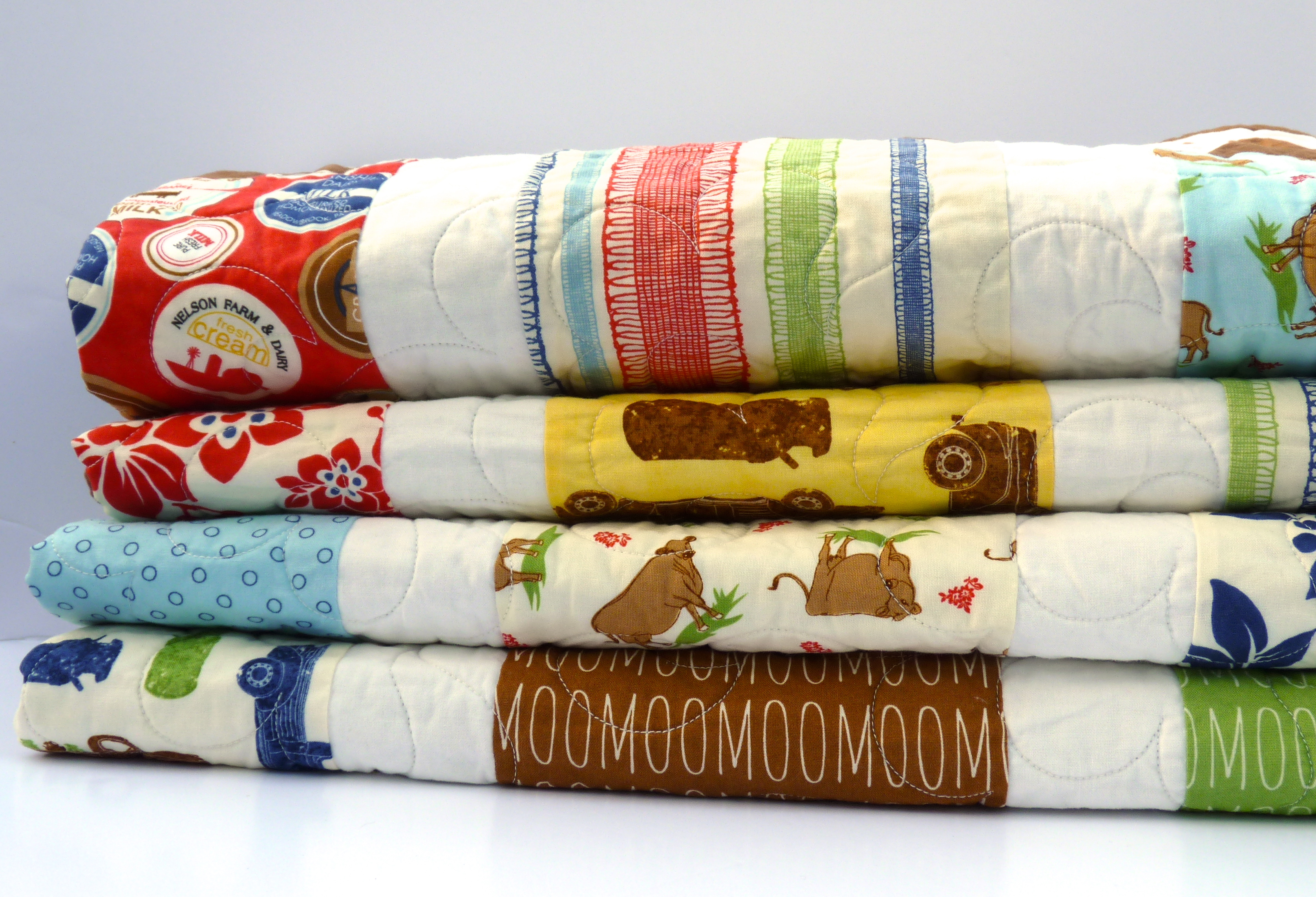
The finished quilt was professionally long-arm quilted with an overall pattern called Cloud Nine.

Milk Cow Kitchen patchwork quilt backing

Milk churn patchwork quilt backing

And for the backing, I chose this green Lulu fabric from the Up Parasol range by Heather Bailey.  It is one that I wish I had been able to buy more of as it really is the most lovely light olive green.

The 100% cotton wadding in the quilt makes it irresistibly soft and warm and gives the quilt a beautiful drape.   At 70 inches by 64 inches, it is a very versatile size and perfect for a bed or a sofa.

Today I received the good news that Royal Mail and Australia Post did their bit and delivered the quilt safe and sound to its new home.  And I’m very pleased to say that it was a very welcome present that will be much loved for many years to come.  A special gift for a lovely couple.

Checkerboard quilt – a work in progress

Strangely I seem to have a number of half-finished quilts cluttering up my workroom.  I’m not sure how this happened.  Best not to dwell on the how and instead focus on getting them completed.

With this in mind, over the past week I have been working on a checkerboard quilt top that had been languishing on my dining room table for (many) months.   I had decided to use a jelly roll for the patterned sections and then very quickly wished that I hadn’t.  Don’t get me wrong.  I love using jelly rolls.   Sadly this one seemed to have more than its fair share of strips not cut on the grain and many were slightly wider than 2 1/2 inches.   After a bit of judicious cutting, thankfully this wasn’t too much of a problem.

Rather than cut out individual 2 1/2 by 2 1/2 inch squares, I used this strip piecing tutorial by Red Pepper Quilts.  I selected 33 strips from my jelly roll, cut them in half on the fold line and then attached a 2 1/2 inch wide strip of plain fabric  to the long side.   Although not really necessary, I cut the jelly roll strips in half to reduce any potential problems if the strips were wonky.   I really needed only 32 jelly roll strips for the quilt.  The extra one was to allow for any cutting errors (sad to say, there was one) and also ensured I had plenty of options when putting the quilt top together so that similar/same patterns weren’t right next to each other.  The sewn strips were then cut down to 10 1/2 inches long and then sewn to another pair of sewn strips.  Although these strips were slightly shorter than the 11 inches recommended in the tutorial there was more than enough fabric available when cross-cutting the strips.

Ambleside strips for checkerboard quilt

Checkerboard quilt strips

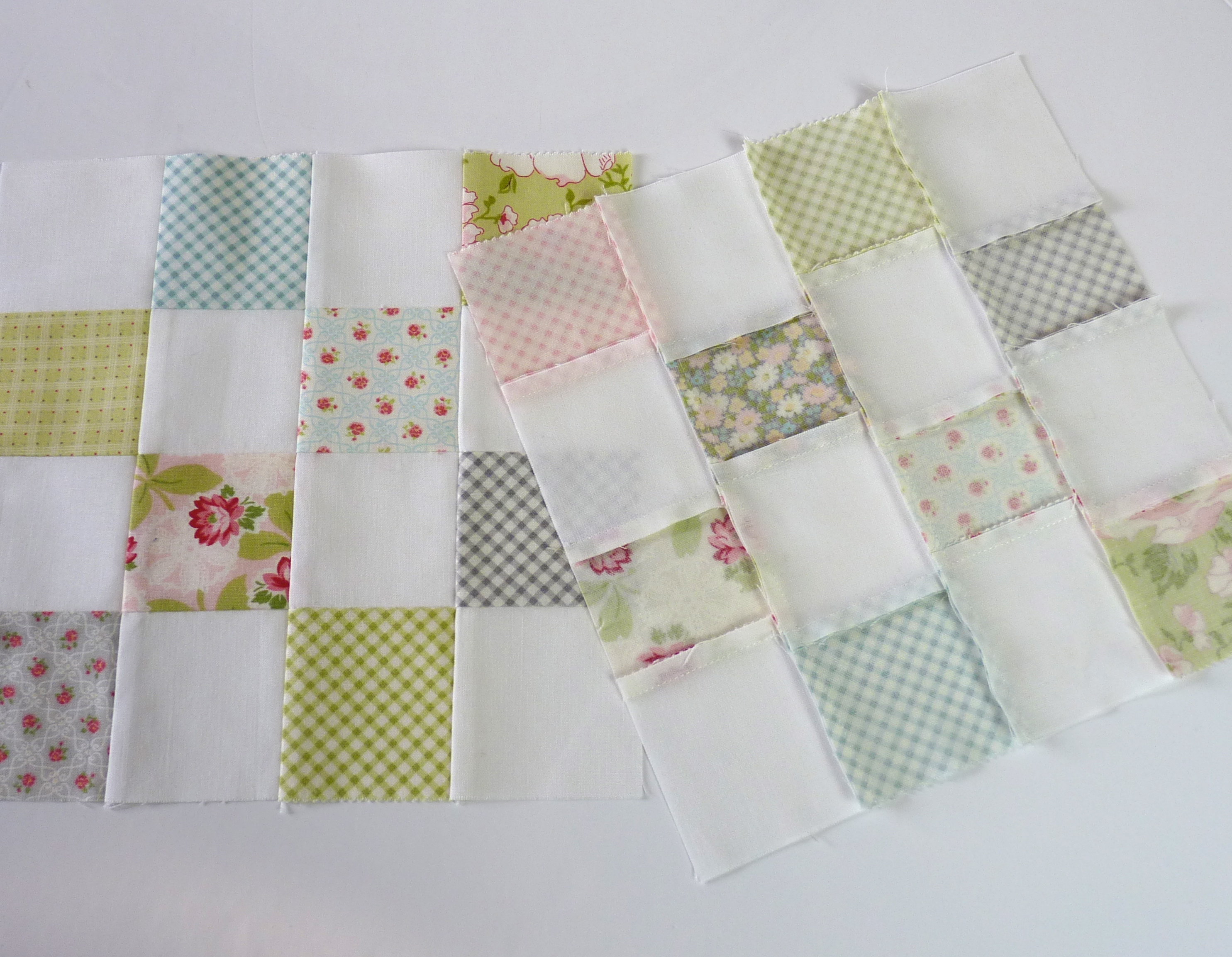
I worked on a quarter of the quilt at a time as I don’t have a large enough space in which to layout the full quilt design.  Making up blocks of 16 squares each as per the tutorial made it much easier to nest the seams together and the reverse stayed very neat and tidy too.

Ambleside checkerboard quilt blocks

Checkerboard quilt blocks

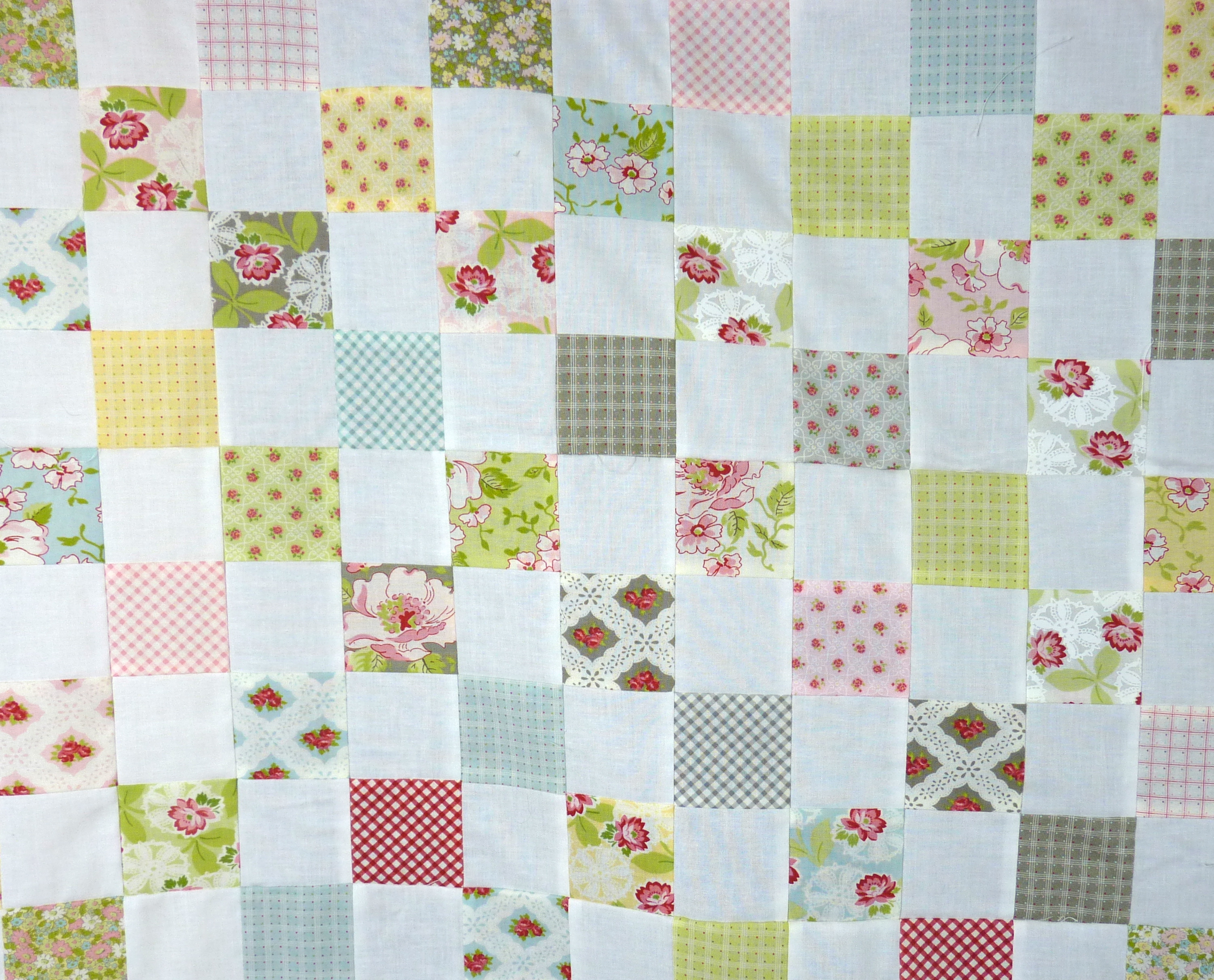
My quilt top is now complete and ready for quilting.

Ambleside checkerboard quilt top

Checkerboard quilt top

I love the colours in this one.  They are so soft and pretty.  And the white squares make it look lovely and fresh.   Here is a close-up so you can see all that prettiness in detail.

Ambleside checkerboard quilt top detail

Checkerboard quilt top detail

It reminds me of meadow flowers strewn across a white sheet and I don’t even mind the greys in this one.  Now I just need to choose the backing fabric and the quilting pattern.  Decisions, decisions.

Oh, and in case you are wondering, I used an Ambleside jellyroll by Moda –  a very pretty, country cottage collection of rose, daisy, gingham and lace designs – and Bella Solid in Off White for the plain squares.

Back with more soon.

Russian flower nozzles

Last week I bought a set of these instant flower nozzles from Iced Jems.   A friend mentioned them to me  (thanks, Hot Chop Threads!) and as soon as I saw them, they jumped to the top of my ‘must -have-list’.

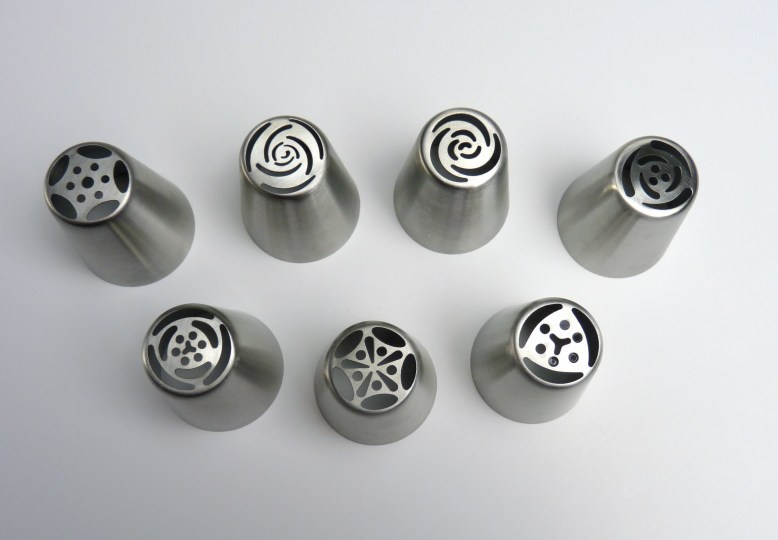
Russian piping tips

Russian flower nozzles

Often the nozzles are mentioned elsewhere as Russian flower nozzles (because they come from Moscow, apparently) and this set from Iced Jems is a selection of the many Russian flower nozzle designs available.   These seven nozzles provide a good selection and I am not sure that you would miss the others as they are really a variation on a theme.

The nozzles promise the ability to quickly pipe intricate buttercream flowers on your cupcakes.  Could it really be so easy?   Only one way to find out – bake some cakes, make some buttercream (I used American buttercream here) and get piping!

My set includes two rose bud nozzles  – this one and the other similar nozzle that produces finer petals.

Russian piping tip - rose bud

Russian flower nozzle – rose bud

The other five nozzles in the set produce variations of tulip flowers like these.  Don’t you love those little stamens?

Russian piping tip - tulip

Russian flower nozzle – tulip

So what did I think?

Well, I love the nozzles and they quickly turn any cupcake into a beautiful posy of flowers.    More creative effects are possible by adding piped leaves, using multiple colours of buttercream in the piping bag to give a striped effect, or using the rose bud nozzle as the starter for a larger rose.  Something for me to try on another day.

I did find the nozzles took a bit of practice to get the flowers to form properly without sections breaking or worse, not adhering to the cupcake at all, or looking more like a blob than a flower.

To get the flowers to stick to the cupcake, I found that it helped if I spread a little fresh buttercream on the cupcake just before piping so the flower had something to stick to.   And wiping the nozzle tip between each flower helped ensure each flower piped cleanly.   The consistency of the buttercream was absolutely critical to success.  It has to be fairly stiff to form the intricate flower.  Once the buttercream warmed up from the heat of hands, I found I piped blobs rather than flowers.  Easily fixed by popping the piping bag in the fridge for a minute or two to cool down.  Timing was important here as you can’t let the buttercream get too hard.

Now off to make more buttercream and give those other nozzles a try.

Improv patchwork

Funny how things don’t turn out how you planned.  One of my New Year resolutions was to write a weekly blog post.  And we can all see how well that turned out!   Well, I am not giving up on my resolution just yet.  So on to my first post for the year.  Better late than never.

Two weeks ago I spent a fabulous day with amazing quilter Charlotte Newland at The Village Haberdashery learning the techniques of improvisational patchwork.

First up was making blocks from scraps chosen at random from plastic bags – with NO peeking!  Given that I have a thing about colours going together, I found the no peeking aspect particularly challenging.   And I was pleasantly surprised at how well my scrappy block turned out (ooh, the Liberty print!).  Doing this with your own scraps must bring back many happy memories of items you’d made earlier.

Improv patchwork block

Improvisational patchwork block

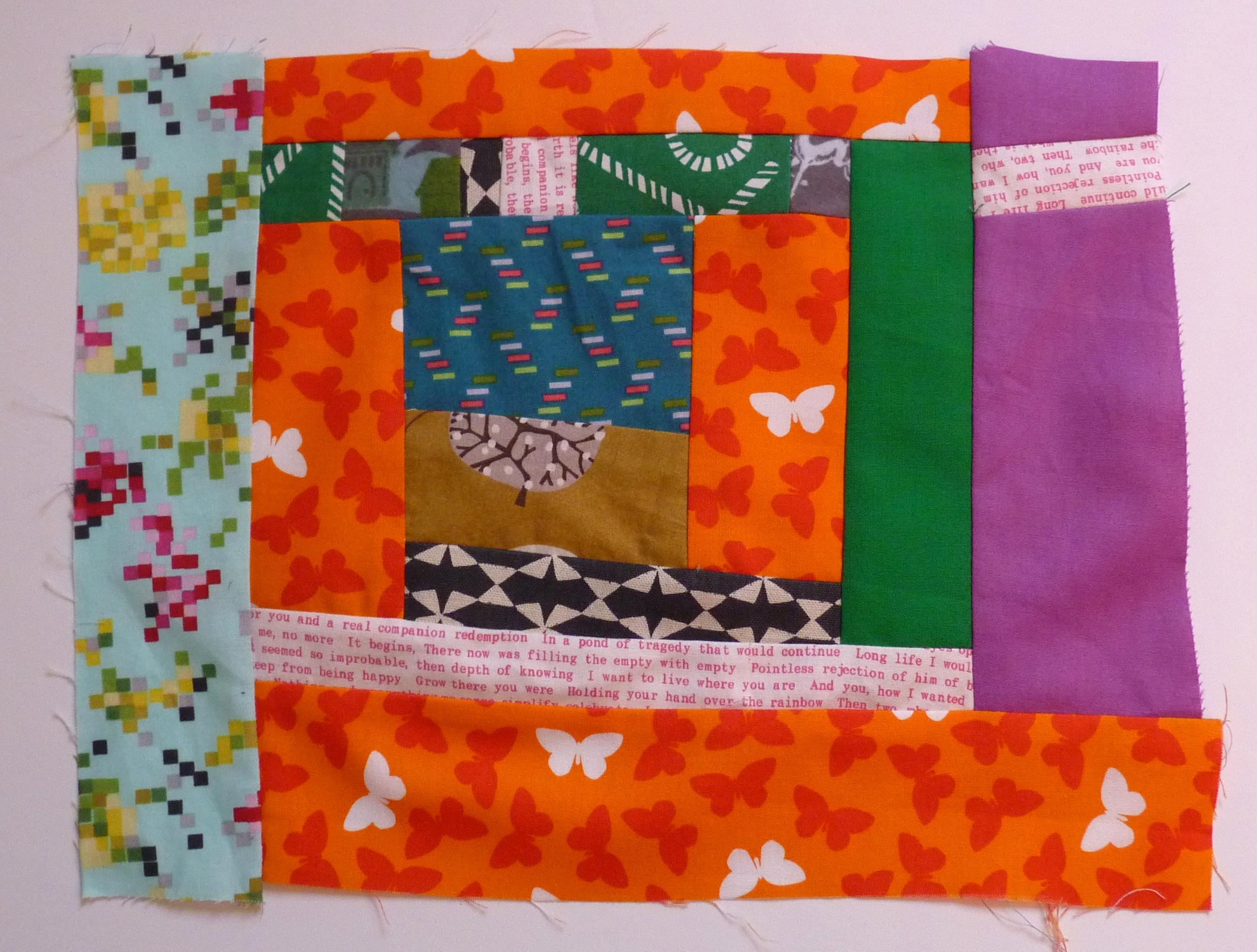
For our next block we were allowed to add in pieces of our chosen fabric (the orange butterflies) along with randomly chosen scraps.  I love the tiny pieces of text fabric in this block.

Improv patchwork block

Improvisational patchwork block

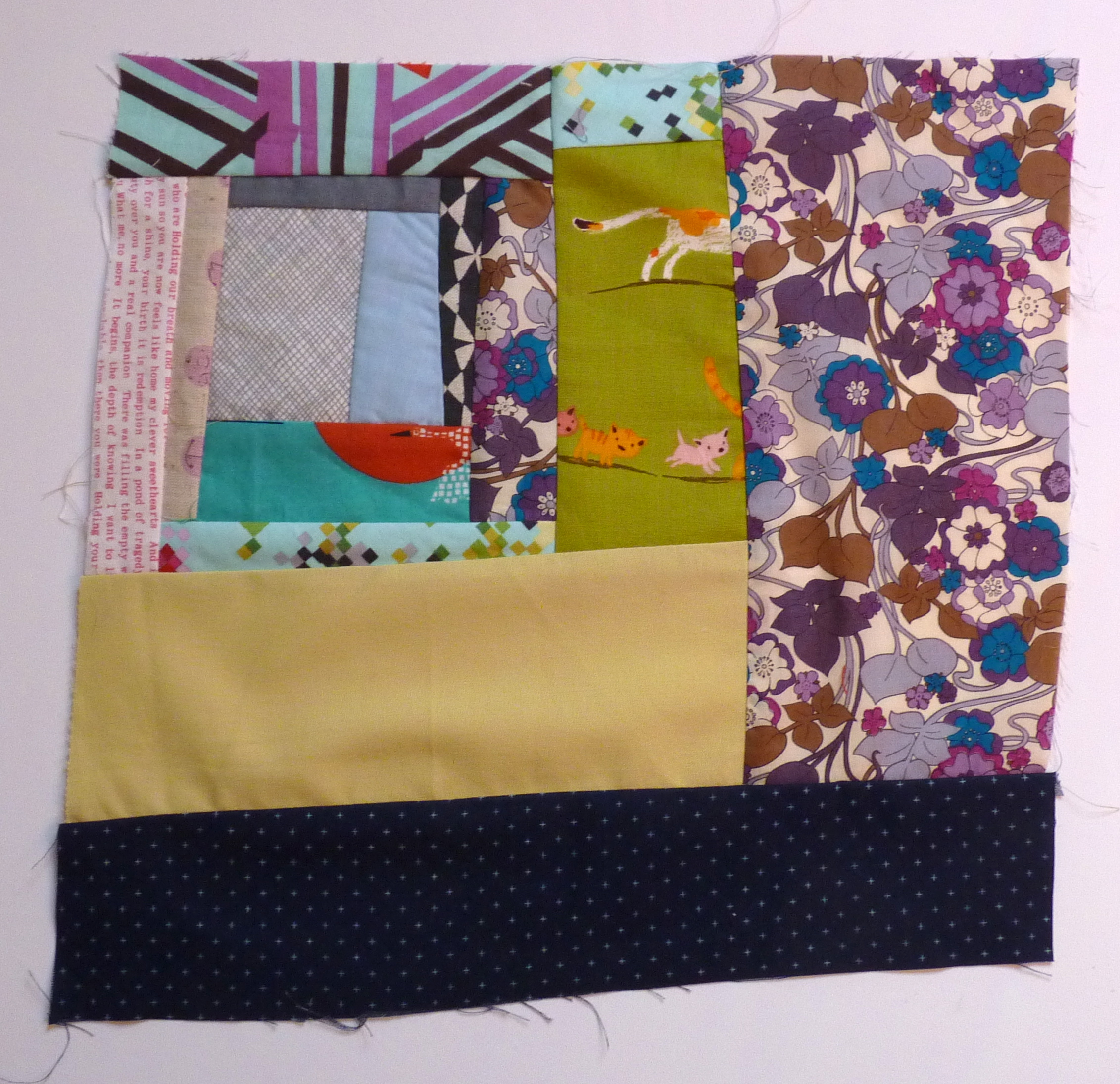
The main part of the day was spent making a piece of improvisational fabric from three fat quarters.   Below you can see what I made after a lot of cutting and sewing.  This was a lot of fun and very liberating.   Need to cut with a ruler?  Nah.  Your seams aren’t a perfect 1/4 inch?  Doesn’t matter.  Want to leave in the selvages?  Go ahead.  What bliss!

I’m not sure I like my final result but this isn’t a surprise as I did deliberately choose fabrics that weren’t my favourites.  I haven’t decided what to make with it yet.  A wall quilt, perhaps a mat for the cat…

Improv patchwork sample

Improvisational patchwork sample


Charlotte also showed us how to sew improvisational curves, snowball blocks and sticks.  Sorry, I don’t have photos of these as I was far to busy sewing.

Thanks, Charlotte for a great class and an opportunity to work outside my comfort zone.  I know that I’ll use what I have learnt in future quilts, particularly the improv log cabins and curves.

Drawstring bags

This Christmas I resolved to make as many presents as possible.   As well as making the presents, I also took the opportunity to gift some of them in a re-usable wrapping.  Enter the lined drawstring bag.

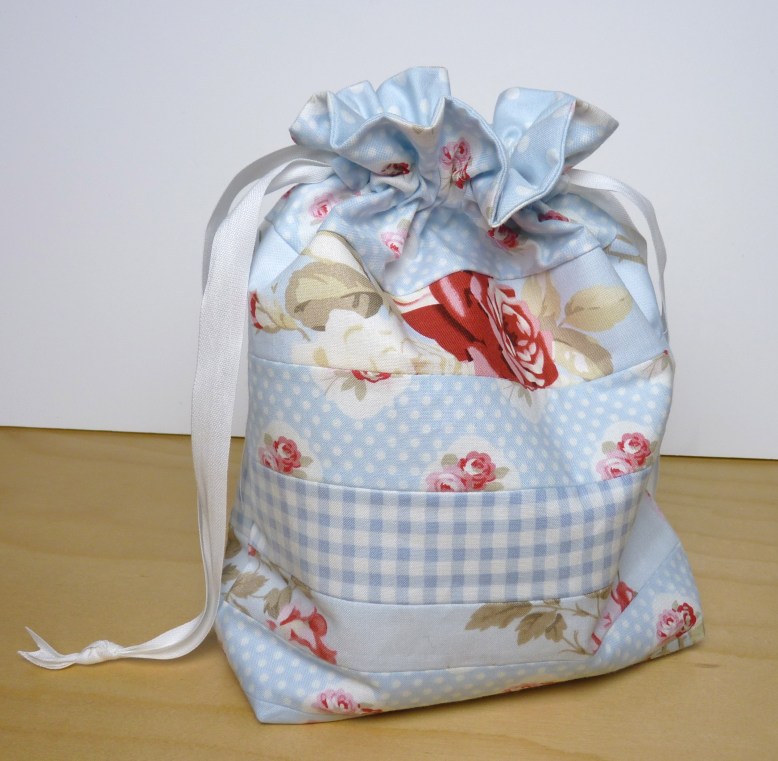
Shabby chic drawstring bag

Striped drawstring bag

This size (about 10 inches high) is perfect for holding smaller presents, such as socks, underwear, books or chocolates, however the bags can be made in any size that you like.  I used this fabulous tutorial by Jeni Baker.   I did change it slightly in that I cut out a square at the base of the bags to create the box, rather than struggle with lining up seams on the corners.  On Jeni’s blog, you’ll find other tutorials showing how to modify the basic bag pattern, such as this one that I used to make the striped bag above.

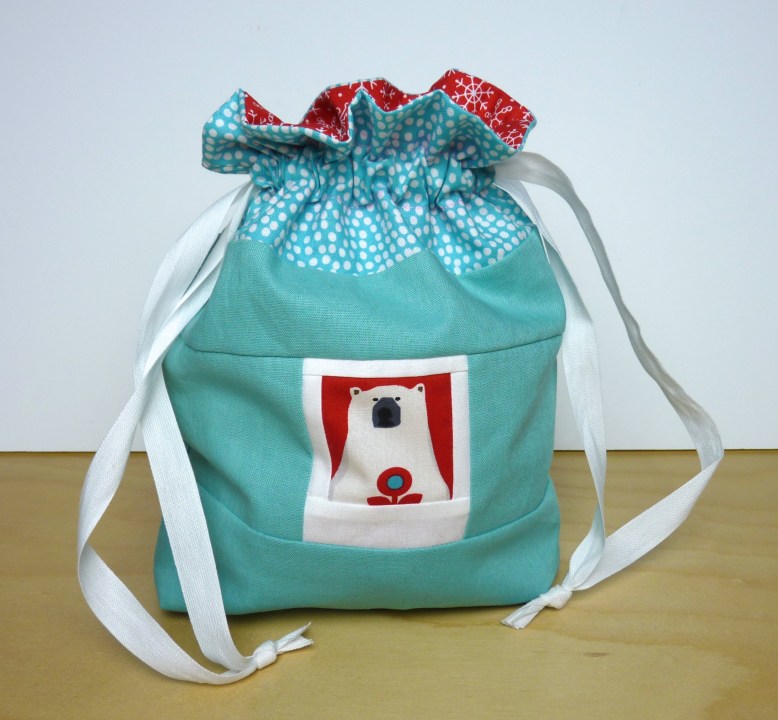
It is easy to customise these drawstring bags by choosing colours and fabrics to make a truly individual gift.  Here is one of my favourites, a suitably christmassy bag incorporating a polaroid block.

Lined drawstring bag with bear polaroid

Polaroid block drawstring bag

As well as a re-usable option for present wrapping, I had read on the Daily Stitch recently that drawstring bags are the perfect gift for new mums. Who knew?  This one was made following Jeni’s basic tutorial although I omitted the contrast top and added pom pom trim instead.  It is so cute even the bear likes it.

Drawstring bag

Lined drawstring bag with pom pom trim

These little drawstring bags are remarkably versatile, easy to make and suitable for people of all ages.  Great for holding toys, a nappy, pyjamas, sewing supplies, underwear for a holiday…  The list goes on.  It is a wonder how we all managed so long without them.